Calm, confident, ready: how to ace your very first lesson
Learn exactly what actually happens during your very first lesson and how to prepare for success

What to expect
Your first driving lesson can feel nerve-wracking, but it doesn't have to be. Most first lessons are far more relaxed and structured than new drivers expect. Your instructor won't throw you straight into busy traffic. Instead, they'll take the time to get to know you, understand your confidence level, and ease you into the experience step by step. Knowing what's coming makes a big difference.
Why preparation matters
Walking into your first lesson with even a basic understanding of what to expect sets you up for a much smoother start. Students who arrive prepared tend to feel calmer, ask better questions, and make faster progress from the very beginning. A little preparation goes a long way, and it starts before you even get in the car.
What happens in a typical first lesson
1. The introduction
Your instructor will introduce themselves, explain how lessons work, and do everything to put you at ease before anything else.
2. Cockpit checks
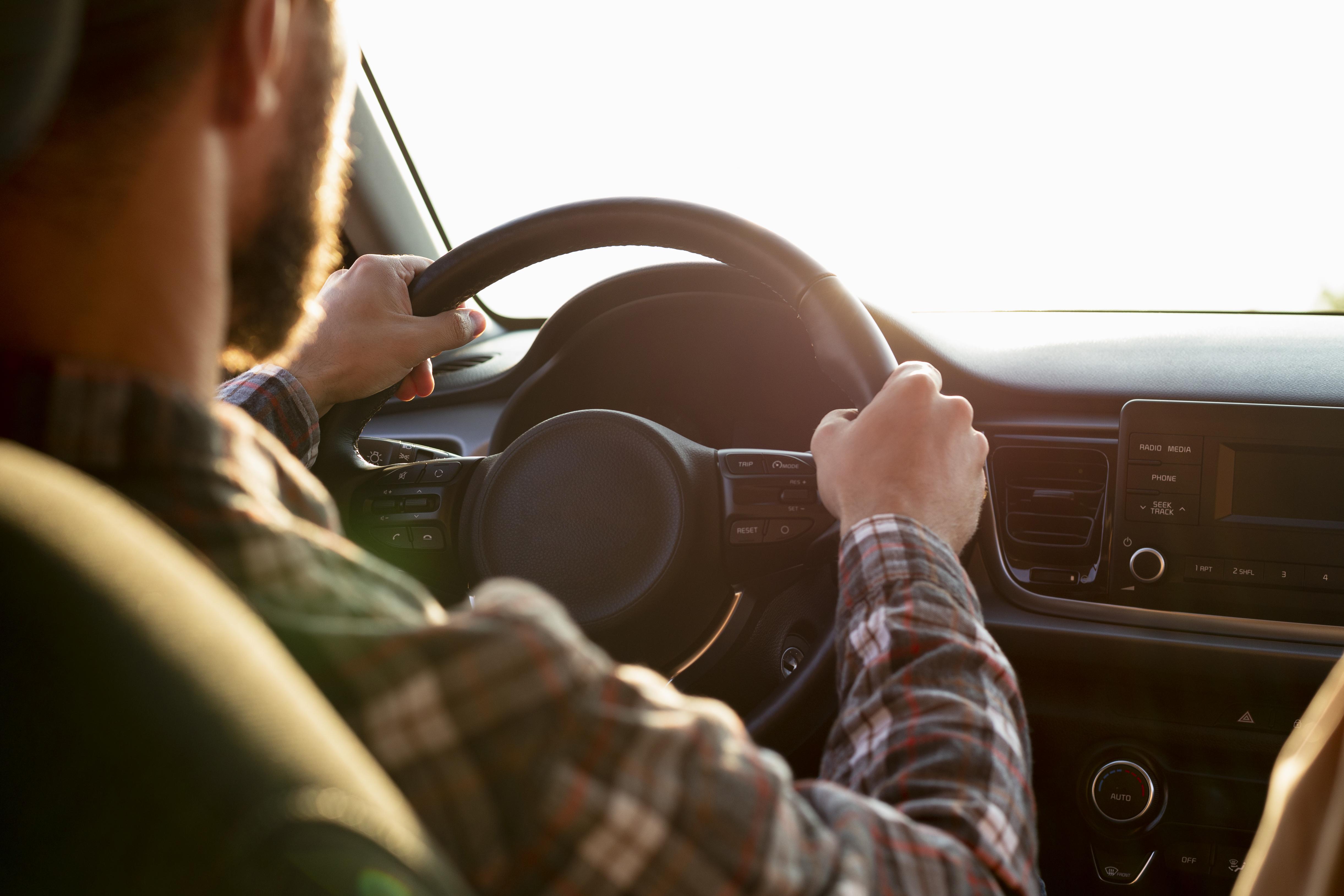
Before moving, you'll cover the basics: mirrors, seat position, seatbelt, and controls.
3. Moving off and stopping
Most first lessons focus on moving forward and stopping in a controlled way. This builds the foundation for everything that follows.
4. Steering and basic control
Practise keeping straight, making turns, and getting a feel for the steering, your instructor will guide and encourage you throughout.
5. Feedback and review
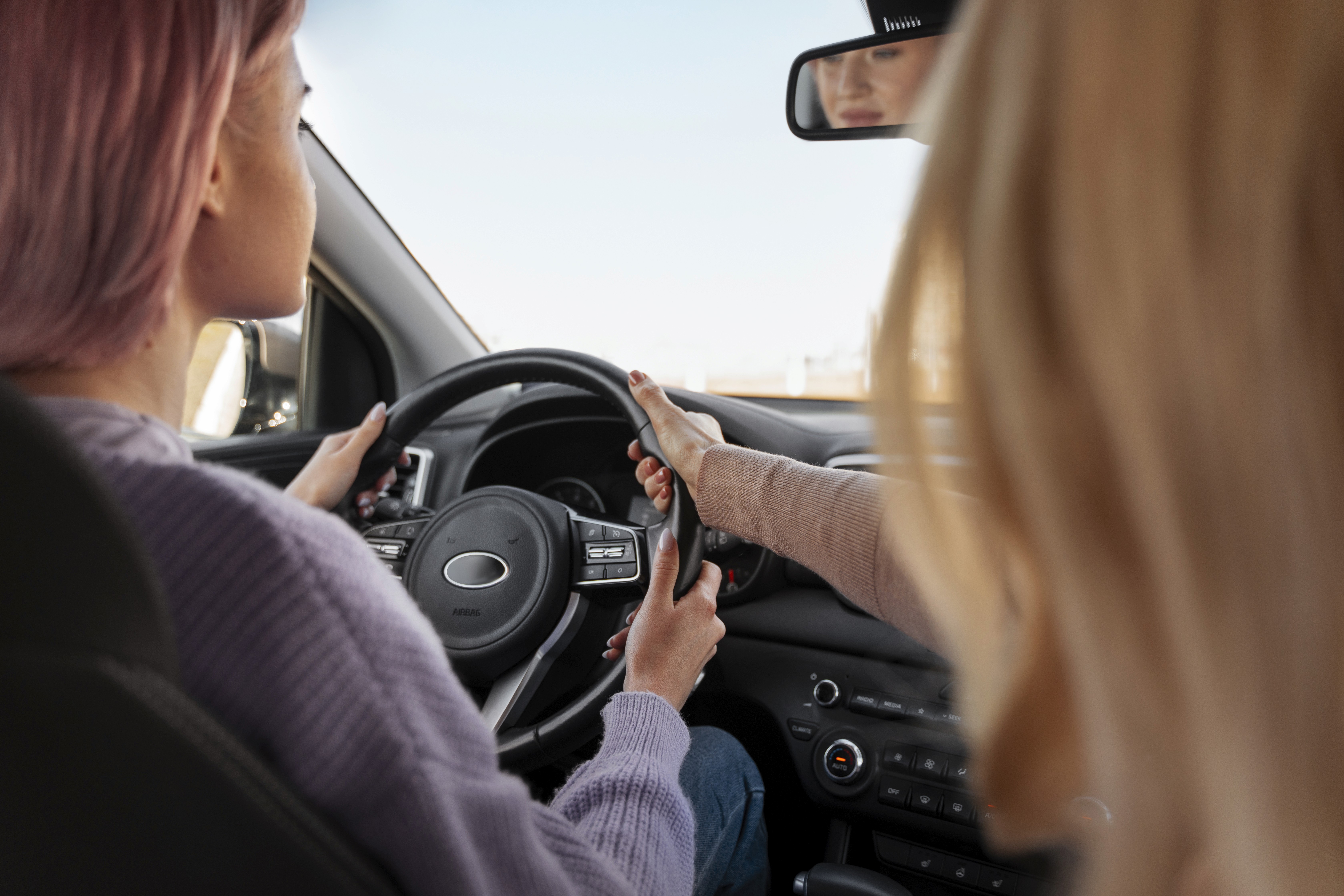
At the end, your instructor will cover what went well and what to focus on next. Valuable feedback after every session.
What to bring and how to prepare
Provisional licence: you'll need this with you before your lesson can begin.
Comfortable flat shoes: proper footwear gives you better feel and control of the pedals.
A good night's sleep: arriving rested helps you stay focused and absorb information faster.
Arrive a few minutes early: rushing before a lesson adds unnecessary nerves.
An open mind: your instructor expects a complete beginner and will guide you through every step.
Common defensive driving techniques
Stalling: it happens to every new driver and is a completely normal part of learning.
Making mistakes: errors are how progress is made, and your instructor expects them.
Looking foolish: every driver on the road has been exactly where you are right now.
Being judged: your instructor is there to support and encourage you, not to criticise.
Conclusion
Your first driving lesson is the beginning of one of the most valuable skills you'll ever develop. With the right instructor and a calm mindset, you'll leave feeling more confident than when you arrived.
Show up ready. Drive away motivated.
What to expect
Your first driving lesson can feel nerve-wracking, but it doesn't have to be. Most first lessons are far more relaxed and structured than new drivers expect. Your instructor won't throw you straight into busy traffic. Instead, they'll take the time to get to know you, understand your confidence level, and ease you into the experience step by step. Knowing what's coming makes a big difference.
Why preparation matters
Walking into your first lesson with even a basic understanding of what to expect sets you up for a much smoother start. Students who arrive prepared tend to feel calmer, ask better questions, and make faster progress from the very beginning. A little preparation goes a long way, and it starts before you even get in the car.
What happens in a typical first lesson
1. The introduction
Your instructor will introduce themselves, explain how lessons work, and do everything to put you at ease before anything else.
2. Cockpit checks
Before moving, you'll cover the basics: mirrors, seat position, seatbelt, and controls.
3. Moving off and stopping
Most first lessons focus on moving forward and stopping in a controlled way. This builds the foundation for everything that follows.
4. Steering and basic control
Practise keeping straight, making turns, and getting a feel for the steering, your instructor will guide and encourage you throughout.
5. Feedback and review
At the end, your instructor will cover what went well and what to focus on next. Valuable feedback after every session.
What to bring and how to prepare
Provisional licence: you'll need this with you before your lesson can begin.
Comfortable flat shoes: proper footwear gives you better feel and control of the pedals.
A good night's sleep: arriving rested helps you stay focused and absorb information faster.
Arrive a few minutes early: rushing before a lesson adds unnecessary nerves.
An open mind: your instructor expects a complete beginner and will guide you through every step.
Common defensive driving techniques
Stalling: it happens to every new driver and is a completely normal part of learning.
Making mistakes: errors are how progress is made, and your instructor expects them.
Looking foolish: every driver on the road has been exactly where you are right now.
Being judged: your instructor is there to support and encourage you, not to criticise.
Conclusion
Your first driving lesson is the beginning of one of the most valuable skills you'll ever develop. With the right instructor and a calm mindset, you'll leave feeling more confident than when you arrived.
Show up ready. Drive away motivated.
Take the first step toward driving with confidence and freedom
Take the first step toward driving with confidence and freedom
Take the first step toward driving with confidence and freedom